What Behaviour Escalation Actually Looks Like
When people hear the word “escalation,” a certain image comes to mind: hitting, yelling, swearing, throwing or breaking things, running away. Basically, what it looks like when everything’s gone wrong. While these behaviours can certainly occur during escalation, they are almost never the beginning of what we call the escalation cycle.
It’s important to know that each person’s escalation cycle looks different in terms of what behaviours occur when. Behaviour support practitioners will often break the escalation cycle down into several different stages. Not everyone will move through these stages in exactly the same way, and some people may skip stages altogether.
Baseline
Baseline is what the person looks like when they’re calm and not showing any signs of escalation.
Early escalation
At this stage, there may be some signs that the person isn’t doing so well. They might be quieter or more withdrawn than usual. They might pace, frown, grunt, or show other signs that they're becoming uncomfortable or overwhelmed.
Escalation
When someone is well and truly escalating, they might be swearing, yelling, making threats towards other people, or slamming doors. It will be clear that something’s not right.
Peak of escalation
At this point, the person is about as escalated as they can get. They might be screaming, hitting, kicking, pushing, punching, or pulling hair. They may break items, run away, remove clothing, or engage in other behaviours that place themselves or others at risk.
De-escalation
When someone is de-escalating, they might become quieter and less erratic. They might be yelling less, or crying. Be warned, someone who is de-escalating is still very sensitive, and can re-escalate quite easily.
Post-crisis depletion
At this stage, the person might withdraw or retreat away from other people. They might be tired or sleepy, and they might not respond verbally to you.
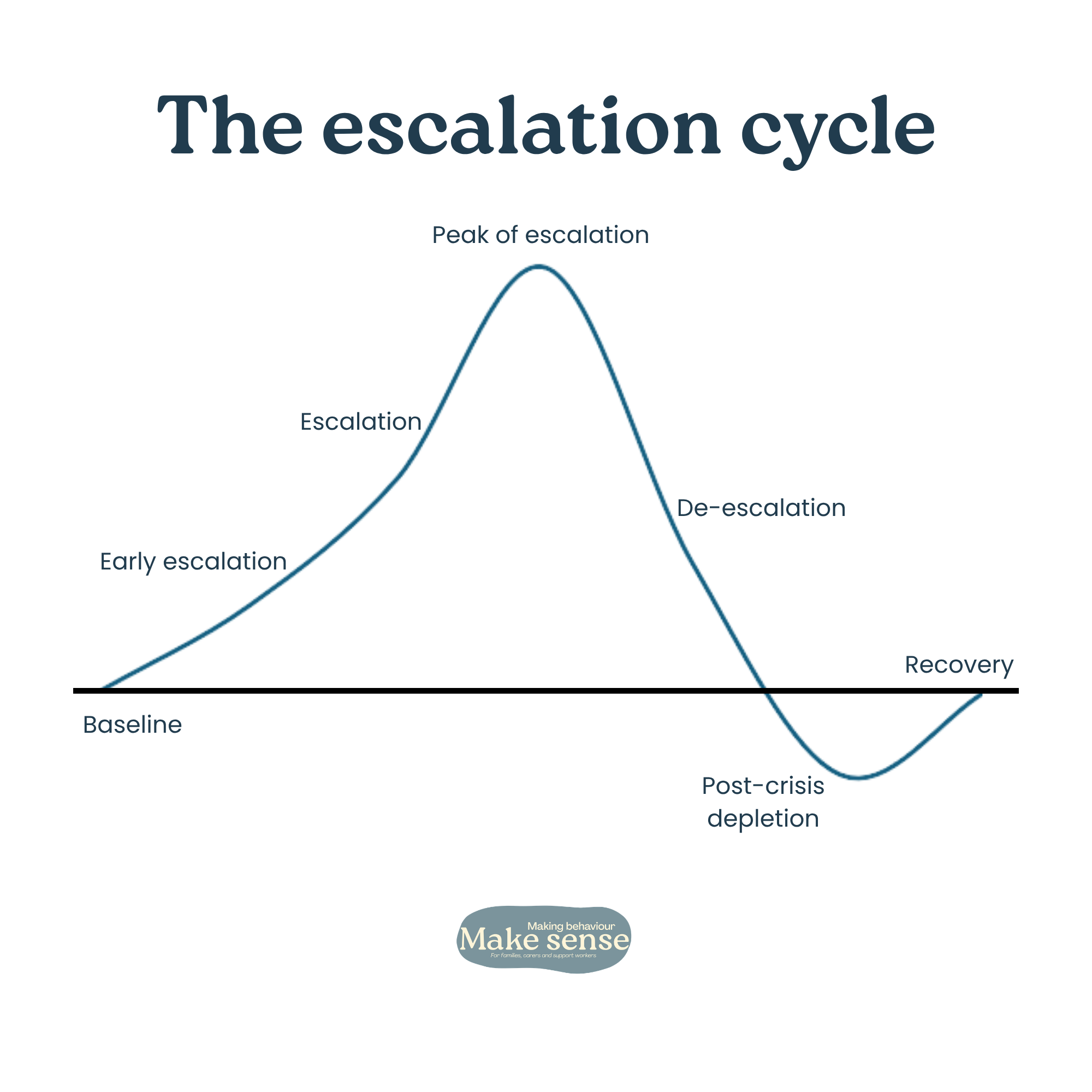
The escalation cycle, graphed as a curve.
Recovery
At the recovery stage, the person has returned to a baseline state. They may apologise, or express remorse. They also may not, and they may act like nothing happened. They also might not be able to recall the previous escalation.
Many support workers are taught to recognise escalation, but fewer are taught how their response should change across the escalation cycle. What is helpful during early escalation may be unhelpful, or even harmful, during peak escalation. Understanding where someone is in the cycle is only the first step.
The most important thing to remember is that the support you provide should change depending on where the person is in their escalation. Behaviour in Practice provides practical guidance on what to do (and what to avoid) at each stage of the escalation cycle, helping support workers respond with confidence when behaviour becomes challenging.